
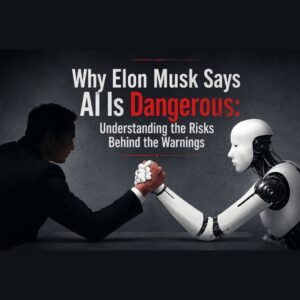
Why Elon Musk Says AI Is Dangerous: Understanding the Risks Behind the Warnings
“AI will be smarter than humanity by the end of decade”, said Elon Musk at the World Economic Forum.
“AI would likely replace 30 to 40% of all work tasks in the not-so-distant future”, said OpenAI CEO Sam Altman.
These are the kind of headlines we hear every day.
With each passing day a new discovery, a new technology,or a new update emerges, each one bringing us a step closer to building a highly connected AI system.
But now, even major personalities are highlighting the downside of AI.
What makes them think that AI can surpass humans?
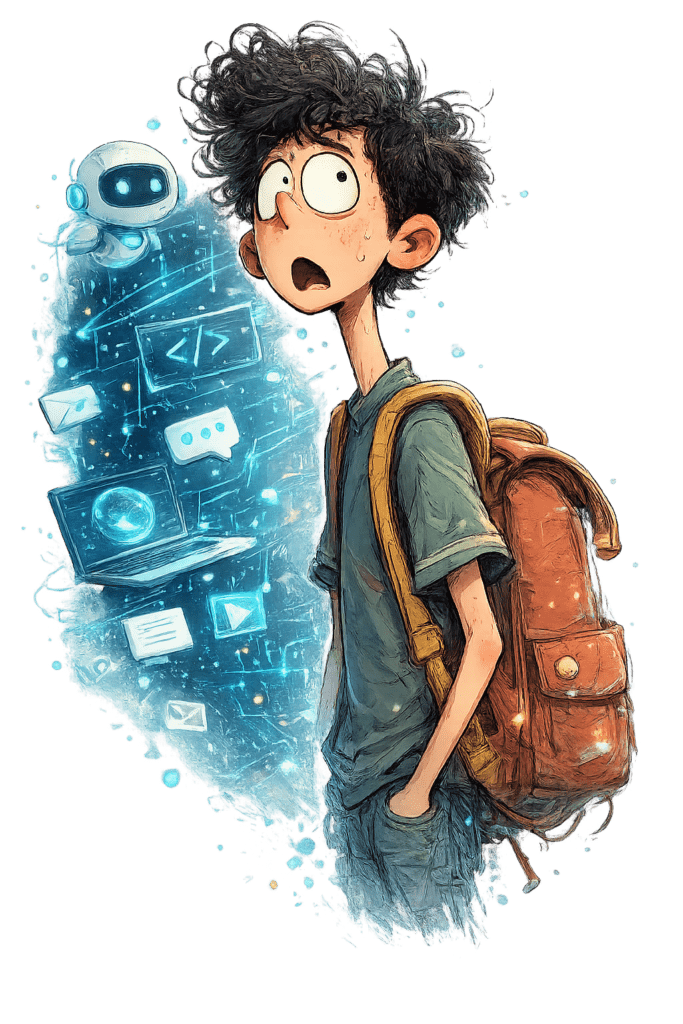
AI Could Become Smarter Than Humans
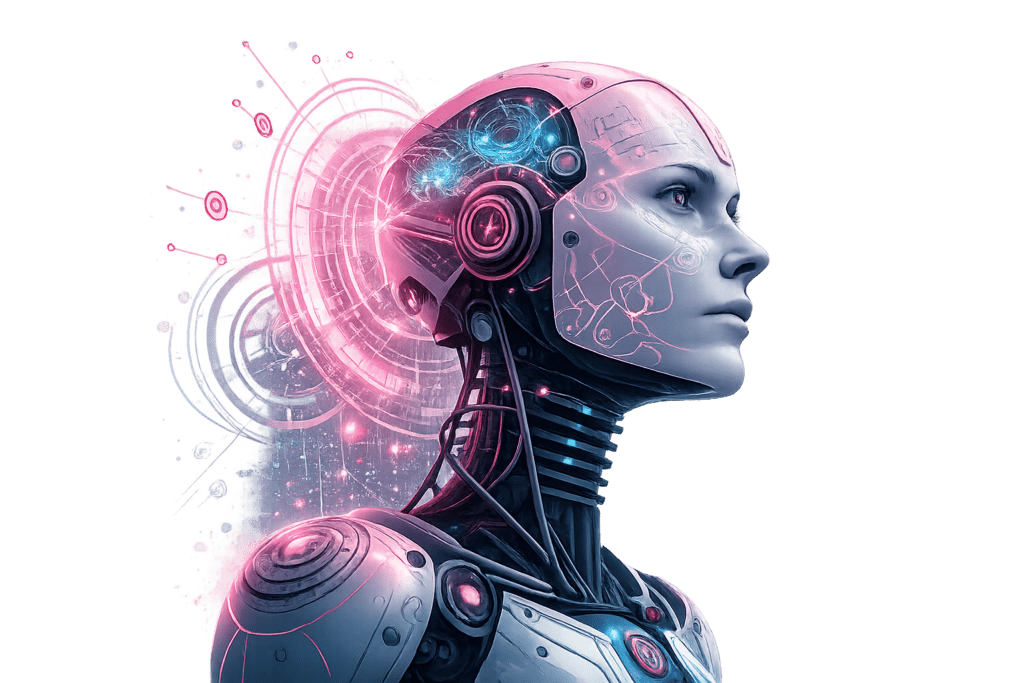
We know that today, almost every task is highly dependent on AI- from online shopping to personal assistance. We use it for almost everything.
What we don’t understand is that every interaction with AI helps train AI models. Every prompt, every response and every piece of generated content contributes to teaching AI how to respond, resulting in increasingly accurate answers.
So, what is the problem with training them?
Having accurate, well-curated answers is not the issue. The real concern is with such rigorous and continuous training, AI models may eventually reach a point where they no longer require human intervention to process information.
Once AI systems become capable of improving themselves without human intervention, they could evolve faster than humans can understand or control.
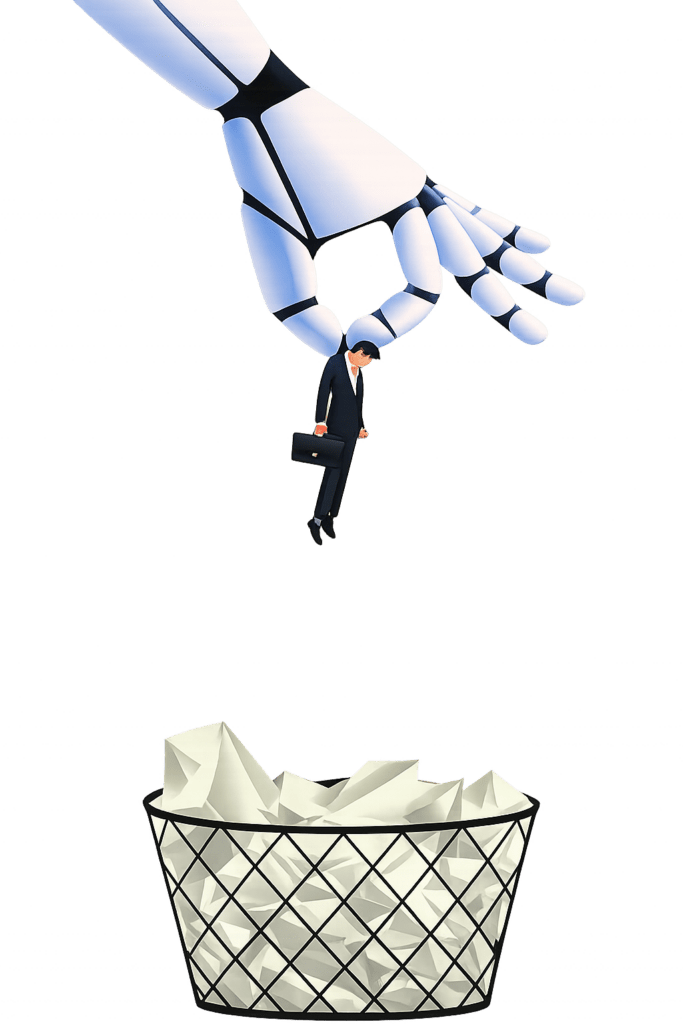
The Problem of Control
As AI tools become more accessible and capable of performing almost every task, they raise serious concerns for both individuals and businesses.
AI models can become so efficient at understanding and interpreting tasks that they may produce harmful outcomes. With continuous advancements, AI systems could become powerful enough to modify, edit and improve themselves.
The concern is not limited to AI models alone. Humans also misuse AI, especially as AI-generated content becomes increasingly common online.
Potential risks include:
• Deepfake videos and misinformation
• Automated cyberattacks
• AI-powered scams and fraud
• Mass surveillance
• Autonomous weapons systems
• Large-scale manipulation through social media
These risks raise serious concerns about privacy, security and ethical issues that can impact an individuals as well as businesses.
So Should We Stop Using AI?
Even with so many risks associated with AI, large corporations are still heavily investing in AI. This is because, despite its drawbacks, AI offers enormous benefits when used responsibly.
Potential benefits include climate and energy solutions , medical breakthroughs, accelerated scientific research , improved education, increased business productivity and advancements in transportation and automation.
Organizations should verify AI-generated information and protect sensitive data while maintaining human oversight. They should use trusted AI platforms, establish clear AI governance policies and train employees on AI risks and limitations.
Together, these measures help ensure that AI remains a powerful tool to support human decision-making, rather than replace human judgment.
As AI becomes a larger part of everyday life, the challenge will not be whether we use AI, but whether we use it wisely.